
Why Uganda?
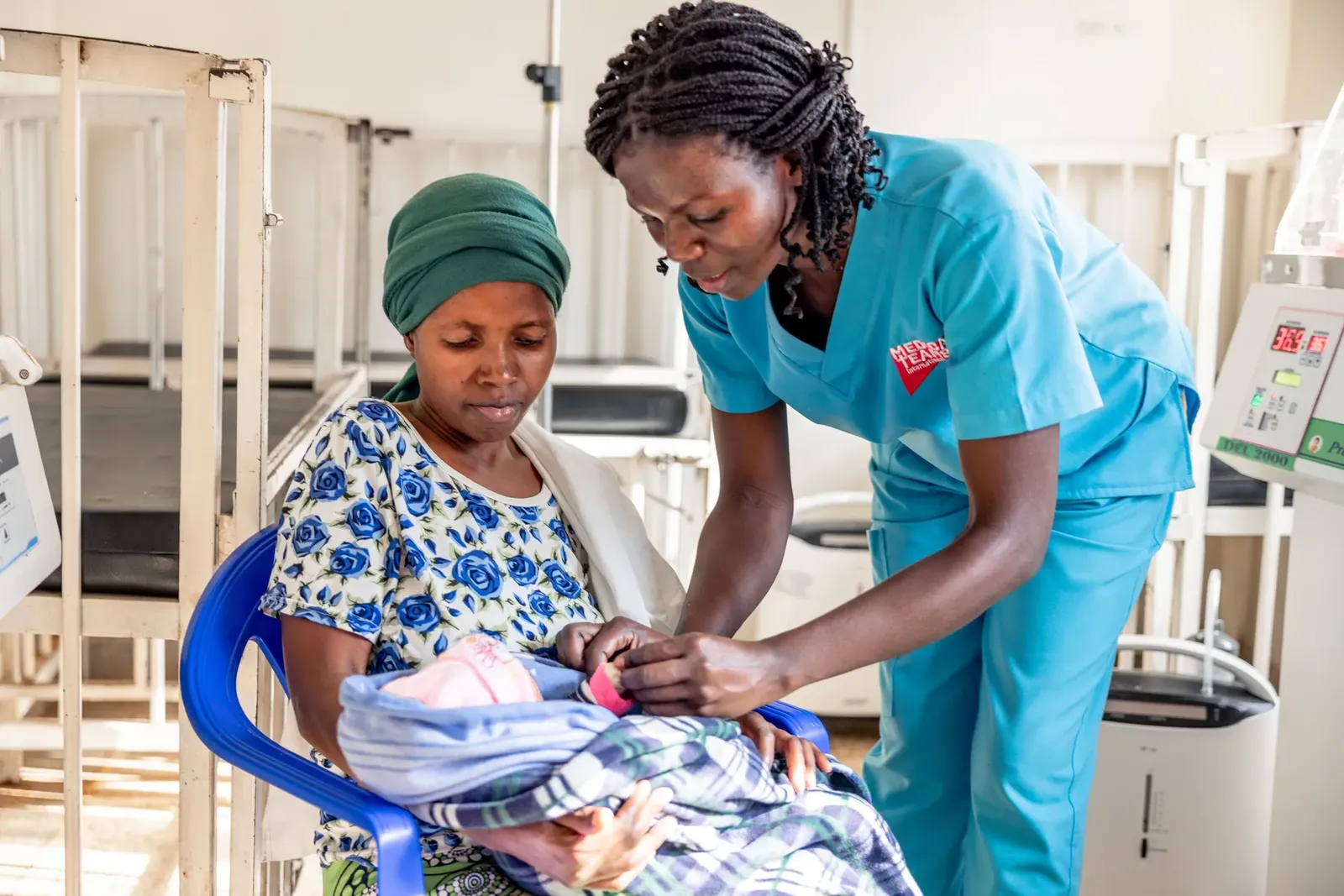
Uganda has made significant progress in healthcare in recent years, yet many challenges remain. Maternal mortality has fallen by almost 50% over the past decade, but 189 mothers per 100,000 live births still die. By comparison, Slovenia’s three-year average is 2–3 mothers per 100,000 live births. Newborn mortality also remains high, at 22 deaths per 1,000 live births, well above Slovenia’s average of 2 infants per 1,000 live births. A major contributing factor is early pregnancy: one in four girls aged 15–19 is pregnant or already a mother, and these pregnancies account for roughly a fifth of all maternal deaths.
Climate change also has a major impact on residents’ health. More frequent droughts, floods, and storms destroy infrastructure, reduce access to clean water and healthcare, and increase the risk of infectious disease outbreaks. Almost half of Uganda’s health facilities are exposed to drought and nearly 40% to flooding, with many poorly prepared for such conditions.
Uganda continues to carry a heavy burden of infectious disease. Each year around 96,000 new cases of tuberculosis are recorded, with about 10,000 cases going undetected. Leprosy cases are also rising again, while malaria remains one of the leading causes of death among children. In 2023, more than 16 million malaria cases and nearly 2,800 deaths were recorded, most of them among children under five. Despite the rollout of a malaria vaccine and other preventive measures, the disease remains one of the country’s greatest public health challenges.
As in many other parts of Africa, HIV remains a major public health challenge. In 2024, around 1.5 million people in Uganda were living with HIV, roughly 3% of the total population. Thanks to extensive public health programmes, improved access to antiretroviral treatment, and effective monitoring, about 96% of those in treatment have achieved viral suppression, meaning the virus is no longer detectable and cannot be transmitted. Despite this significant progress, Uganda still records around 37,000 new infections a year — far fewer than in the early 1990s, when new infections exceeded 200,000 a year. AIDS-related mortality remains a serious problem, with around 20,000 people dying from its effects each year — a number comparable to the population of the Slovenian town of Ptuj.
In 2026, Uganda was also hit by a deadly Ebola outbreak, which forced the cancellation of two Slovenian humanitarian expeditions.
For these and many other reasons, Vesna, Giorgia, Matija, Ana Karolina, and Eva, members of the Uganda 2027 humanitarian expedition, want to contribute their work, knowledge, time, and solidarity to improving health and quality of life for the people of Uganda.
Sources:
- World Health Organization Regional Office for Africa. Health topics (Uganda) [Internet]. [cited 2026 Jul 28]. Available from: https://www.afro.who.int/countries/uganda/topic/health-topics-uganda
- OECD. Maternal and infant mortality. In: Health at a Glance 2025: OECD Indicators. Paris: OECD Publishing; 2025.
- Statistical Office of the Republic of Slovenia. Deaths, 2025: In 2025 the day with the highest number of deaths was December 26. Ljubljana: Statistical Office of the Republic of Slovenia; 2026 Jun 23 [cited 2026 Jul 28]. Available from: https://www.stat.si/statweb/en/News/Index/14418
- European Centre for Disease Prevention and Control. Ebola disease outbreak in the Democratic Republic of the Congo and Uganda. Stockholm: European Centre for Disease Prevention and Control; 2026 [cited 2026 Jul 28]. Available from: https://www.ecdc.europa.eu/en/ebola-outbreak-democratic-republic-congo-and-uganda
- Uganda AIDS Commission. Uganda AIDS Commission: Ending HIV/AIDS by 2030 [Internet]. Kampala: Uganda AIDS Commission; [cited 2026 Jul 28]. Available from: https://uac.go.ug/